“This is really amazing, it’s a historic event,” says John Kilborn, a resident of Winchester, MA who advocated for one of the nearby fish ladders that got established in 2017 in Winchester Center in Eastern MA, “Because of the cleaner water and new fish ladders, the herring are appearing where they haven’t appeared in at least a hundred years.” (1)
What are river herring? They are fish that live the majority of their lives at sea, but migrate upstream in early May through June to spawn and lay eggs before returning to the ocean. Their historic range was all along the Eastern seaboard from Florida to Nova Scotia. There are two main types most common in the Mystic River, the "Alewife" and the "Blueback" herring. The Maine Department of Marine Resources writes about the more common Alewife species, saying, "Between and within those various habitats [from sea to stream to pond and lake], everything eats alewives: striped bass, bluefish, tuna, cod, haddock, halibut, American eel, brook trout, rainbow trout, brown trout, lake trout, landlocked salmon, smallmouth bass, largemouth bass, pickerel, pike, white and yellow perch, seabirds, bald eagle, osprey, great blue heron, gulls, terns, cormorants, seals, whales, otter, mink, fox, raccoon, skunk, weasel, fisher, and turtles." (2) Herring are, in some ways, the life blood of the river, fueling an entire ecosystem. They are an indicator species.
 |
 |
What are river herring? They are fish that live the majority of their lives at sea, but migrate upstream in early May through June to spawn and lay eggs before returning to the ocean. Their historic range was all along the Eastern seaboard from Florida to Nova Scotia. There are two main types most common in the Mystic River, the "Alewife" and the "Blueback" herring. The Maine Department of Marine Resources writes about the more common Alewife species, saying, "Between and within those various habitats [from sea to stream to pond and lake], everything eats alewives: striped bass, bluefish, tuna, cod, haddock, halibut, American eel, brook trout, rainbow trout, brown trout, lake trout, landlocked salmon, smallmouth bass, largemouth bass, pickerel, pike, white and yellow perch, seabirds, bald eagle, osprey, great blue heron, gulls, terns, cormorants, seals, whales, otter, mink, fox, raccoon, skunk, weasel, fisher, and turtles." (2) Herring are, in some ways, the life blood of the river, fueling an entire ecosystem. They are an indicator species.
The Mystic River watershed in Eastern Massachusetts borders 22 different communities as it flows out to the Atlantic ocean and for years the river had received very poor water quality ratings. It was a combination of industrial pollution, street and fertilizer runoff, flooding, development (including dams), sewage outfall after heavy rain events... so many factors that hurt both the river, the human communities along the river, and dropped herring populations to all time lows. Most people though of the river as a waste stream as a opposed to a vital part of the community.
In recent years, however, the Mystic River Watershed Association (MRWA) has been working to change that and bring back the ecological function of the river, despite being in a densely populated urban and industrial area within the Greater Boston Area. The MWRA is striving to turn the Mystic from a problem into part of a resilient solution. Bit by bit, the organization has worked with communities and organizations and volunteers to change the way people interact with the river.
In recent years, however, the Mystic River Watershed Association (MRWA) has been working to change that and bring back the ecological function of the river, despite being in a densely populated urban and industrial area within the Greater Boston Area. The MWRA is striving to turn the Mystic from a problem into part of a resilient solution. Bit by bit, the organization has worked with communities and organizations and volunteers to change the way people interact with the river.
Before the fish ladder was added in Winchester Center (and before other fish ladders were installed before that!), volunteers from MWRA who knew the fish and recognized their importance had tirelessly helped the fish cross the impenetrable dams by catching as many as they could in 10 gallon buckets (The Bucket Brigade) and releasing them over the dam so they could get to their spawning grounds. 20,000 fish, maybe, might make a typical migration through Winchester in the early 2000's. One year an oil tanker (that refilled home heating units) even crashed and spilled in one of the narrow upstream branches in the river. People worried it was the end for the herring. But they came back. As awareness has grown and fish ladders have been put in many places in the lakes, reservoirs and ponds in the Mystic and Aberjona Rivers, the herring have responded in droves. (1)
In fact, 2017 saw the largest recorded herring run in the past hundred years! Around 630,000 herring made it to their native spawning grounds! And with the herring come swarms of blue fish, cormorants, black crowned night herons, bald eagles, and osprey who feast on the herring, a major food source for the watershed. They are an indicator species of the health of the watershed. They even have a symbiotic and very specific relationship with certain native freshwater mussels (such as the "Alewife Floater") that hitch a ride on the fish's gills before dropping off to settle down upstream. Mussels help filter and purify water. Their are even studies documenting herring reducing phosphorus levels (a major water pollutant) in the water. (2) So counter to what one might imagine if you added lots of fish to a waterway, the herring actually leave the rivers cleaner than when they arrived. As Erica Wood, communication manager of the Mystic River Watershed Association says, it is one of the largest herring migrations in the region and it is happening in a densely populated urban area. “This migration is happening right in our backyard and not a lot of people know about it." (1)
2018 saw even more herring at over 750,000 from volunteer and fish cam counts! Another record set. The river is coming back to life.
2018 saw even more herring at over 750,000 from volunteer and fish cam counts! Another record set. The river is coming back to life.
And now in 2019, they are estimating over 1 million.
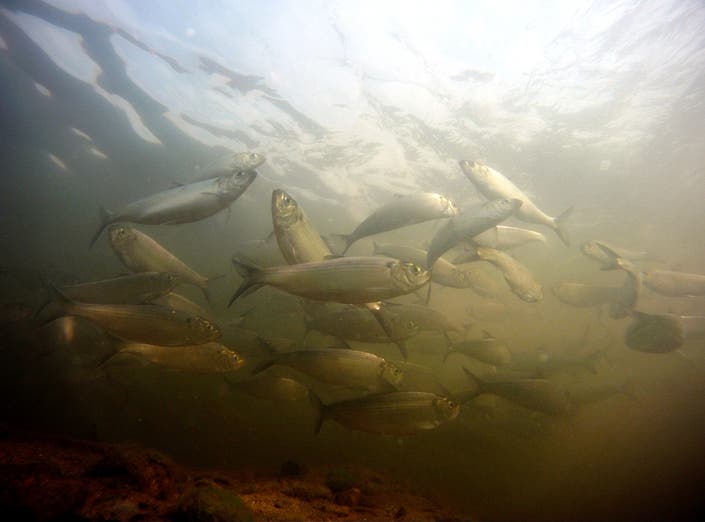
The Return of the Herring!
Read More Here:
1)"Winchester Center Sees One of the Largest Herring Migrations" by By Mariya Manzhos. Mystic River Watershed Association. https://mysticriver.org/news/2019/2/15/winchester-center-sees-one-of-states-largest-herring-migrations
2) Maine River Herring Fact Sheet (including pictures) - https://www.maine.gov/dmr/science-research/searun/alewife.html
(3) "Freshwater Mussels and the Connecticut River Watershed" by Ethan Jay Nedeau
https://www.ctriver.org/product/freshwater-mussels/
(4) "Watch Mystic River Herring Migration and Help Count Fish!" By Mike Carraggi, Patch National Staff | https://patch.com/massachusetts/arlington/watch-mystic-river-herring-migration-help-count-fish


No comments:
Post a Comment